
Moving to Brussels for work or starting a temporary assignment in the city? Getting around is relatively straightforward once you know how the different transport options fit together. Brussels has an extensive metro, tram and bus network, three major railway stations, direct connections to Brussels Airport, shared bicycles and plenty of areas that are easy to explore on foot.
This practical Brussels transport guide covers the basics for new arrivals, from paying for public transport and travelling from Brussels Airport to the city centre to cycling, walking and planning around Brussels Car-Free Sunday.
What Is the Best Way to Get Around Brussels?
For most newcomers, the easiest way to get around Brussels is by combining metro, tram, bus and walking. Contactless payment makes occasional public transport simple, while trains are usually the most convenient option for Brussels Airport and journeys to other Belgian cities.
Where you live also makes a significant difference. Choosing an apartment close to your workplace, a metro station or one of Brussels’ main railway stations can make your daily commute considerably easier.
Public Transport in Brussels: Metro, Tram and Bus
Public transport within Brussels is mainly operated by STIB-MIVB, which runs the city’s metro, tram and bus network. The network connects the city centre with the European Quarter, the Northern Quarter, residential neighbourhoods and many of Brussels’ main business districts.
Rather than relying on a fixed list of tram or bus numbers, use the official STIB-MIVB journey planner and app before travelling. Routes and services can change because of construction works, diversions or network improvements, so checking your journey shortly before departure is the easiest way to find the best current connection.
Paying for Public Transport in Brussels
For occasional journeys, contactless payment is one of the easiest ways to use Brussels public transport. You can tap a contactless debit or credit card, smartphone or smartwatch directly at the validator when entering a metro station or boarding a tram or bus.
A contactless STIB-MIVB journey currently costs €2.40. When changing vehicles, use the same card or device each time. Transfers made within 60 minutes of the first validation are included. Contactless travel also has a daily cap of €8.50, after which additional STIB-MIVB journeys that day do not increase the amount you pay. You can find the current rules on the official STIB-MIVB contactless payment page.
Each passenger needs their own bank card or smart device. One card cannot be used to validate several people travelling together.
If you will be using public transport regularly during a longer stay, a MOBIB card, multi-journey product or season ticket may be more suitable.
Getting from Brussels Airport to the City
Brussels Airport-Zaventem has direct train and bus connections to Brussels. The railway station is located directly underneath the airport terminal, making the train particularly convenient when travelling with luggage.
Direct trains connect Brussels Airport with Brussels North, Brussels Central and Brussels South several times per hour. Brussels Airport currently gives an approximate journey time of 18 minutes between the airport and Brussels Central. Check the latest timetable through the official Brussels Airport train information page.
For most standard train tickets to or from Brussels Airport, the Brussels Airport Supplement is already included in the ticket price. Some specific ticket types require the supplement to be purchased separately, so it is worth checking your ticket conditions before travelling. Current information is available from SNCB-NMBS on travelling to Brussels Airport.
Another option is STIB-MIVB Bus 12, which provides a direct connection between Brussels Airport and Brussels. When travelling from Brussels towards the airport, normal STIB-MIVB tickets and subscriptions can be used. When travelling from Brussels Airport into the city, the special Airport2City fare applies.
Contactless payment for the Airport2City journey currently costs €7.90. You can check the latest fares and conditions on the official STIB-MIVB Airport Line page.
If you are arriving for a move-in with several suitcases, young children or other bulky luggage, a taxi may be more practical. Licensed taxis operate throughout Brussels and taxi stands are available at Brussels Airport and many important locations around the city.
Travelling by Train from Brussels
Brussels is also a convenient base for travelling elsewhere in Belgium. National rail services are operated by SNCB-NMBS, with frequent connections from Brussels North, Brussels Central and Brussels South.
Cities such as Antwerp, Ghent, Leuven, Bruges and Liège can all be reached by train, making rail a practical option for business meetings, day trips and weekend travel.
Tickets and current journey information are available through SNCB-NMBS online, through its app, at ticket machines and at railway stations.
Brussels South — also known as Bruxelles-Midi or Brussel-Zuid — is the city’s main international railway hub. International rail connections from Brussels include destinations such as Paris, London and Amsterdam.
Taxis and Journey-Planning Apps in Brussels
Taxis can be particularly useful when travelling late at night, carrying luggage or reaching a destination that is less convenient by public transport. Brussels has licensed taxis as well as taxi services that can be booked digitally.
For everyday route planning, apps such as Google Maps and the official STIB-MIVB tools can help you combine walking, metro, tram, bus and train connections.
Checking live journey information is especially useful in Brussels because construction works, temporary diversions and service changes can occasionally affect your normal route.
Cycling in Brussels
Cycling can be a practical option for shorter journeys, particularly when your home and workplace are relatively close together. Brussels has continued to expand its cycling infrastructure, while shared-bike systems make it possible to use a bicycle without owning one.
Villo! is Brussels’ public self-service bicycle system, with stations throughout the Brussels-Capital Region. Bikes can be collected at one station and returned at another, and different formulas are available for occasional and regular users.
If cycling will form part of your regular commute, check your route in advance. The most comfortable cycling route is not always identical to the quickest route by car.
Walking in Brussels
Walking is often one of the easiest ways to cover shorter distances in Brussels. This is particularly useful in areas such as the historic city centre, European Quarter and around major public transport hubs.
For many international professionals, combining walking with public transport works particularly well. You might take the metro or train for the main part of your commute and walk the final section to your office, apartment or meeting location.
When choosing where to live in Brussels, it is therefore worth looking beyond the distance on a map. Consider where you will work most often, which station or metro line you are likely to use and which everyday destinations you would prefer to reach on foot.
Car-Free Sunday in Brussels: 20 September 2026
Brussels Car-Free Sunday takes place on Sunday 20 September 2026.
From 9:30 AM until 7:00 PM, motorised traffic is prohibited throughout the Brussels-Capital Region, except for vehicles that fall under specific exemptions or have the required permit.
The Brussels Ring and motorways remain accessible, but access roads leading into the Brussels Region are closed during the car-free period. If you are arriving in Brussels, moving into an apartment or travelling to or from the airport that day, it is important to plan your journey in advance.
Public transport is free throughout Car-Free Sunday, while walking and cycling become particularly convenient ways to discover the city. Full information and any last-minute updates are available on the official City of Brussels Car-Free Sunday page.
Travellers should still check STIB-MIVB and other transport information shortly before travelling, as temporary operational changes may apply during the day.
Choose Your Brussels Location Around Your Daily Routine
Where you live can make just as much difference as how you travel. Someone working near the European institutions will have different priorities from someone commuting to NATO, Brussels Airport or the Northern Quarter.
Before choosing a furnished or serviced apartment, consider where you will spend most working days, how often you need to travel outside Brussels and whether you prefer to walk, cycle or use public transport for your daily commute.
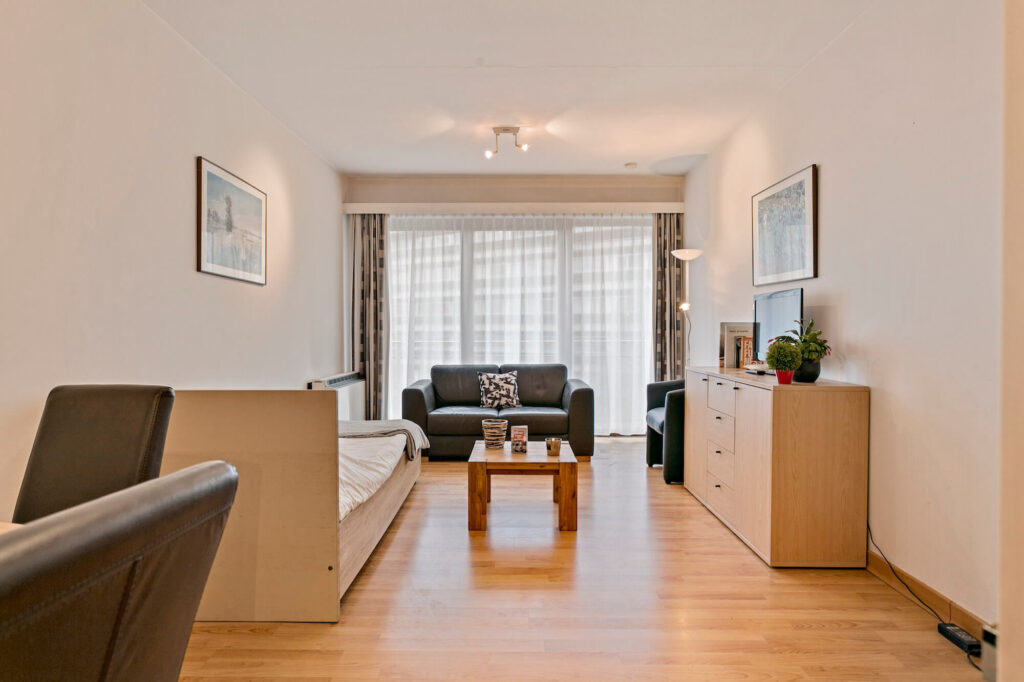
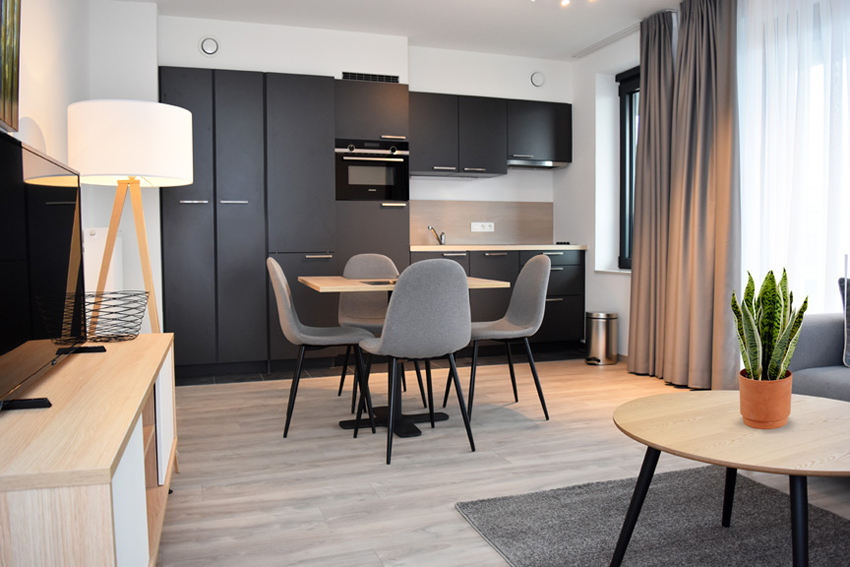
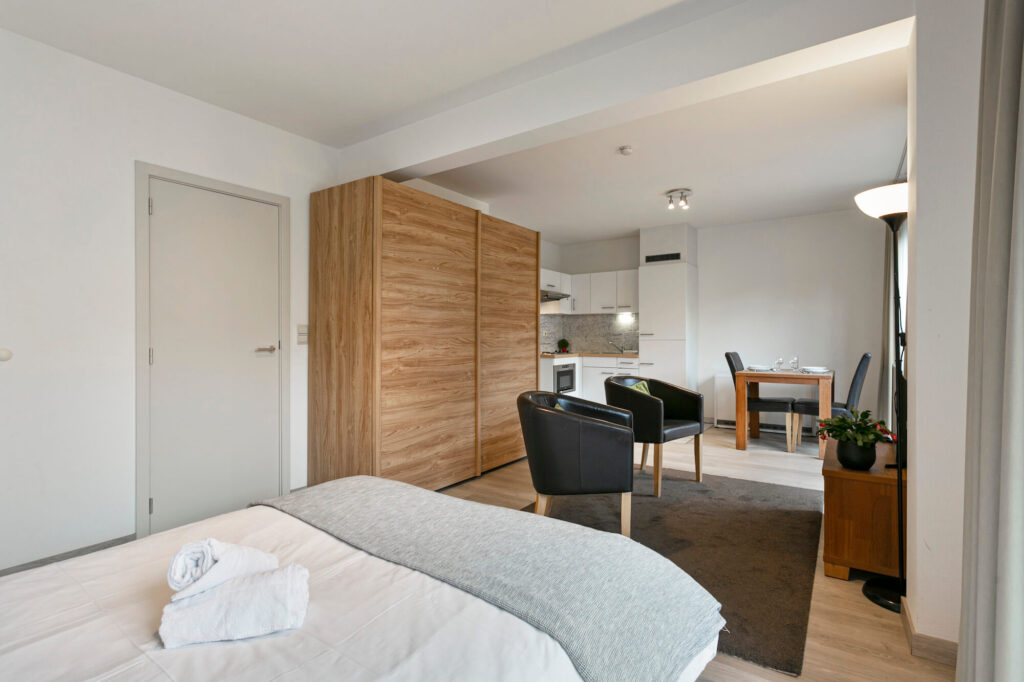
BBF Apartments offers temporary accommodation across several of Brussels’ main business and residential districts.
Professionals working for the European institutions can, for example, choose residences such as Europark in the European Quarter, within walking distance of the European Commission and Schuman station.
For professionals who want to stay centrally, BBF also has apartments across Brussels City Centre, with easy access to public transport, restaurants and the city’s main amenities.
Those working around NATO, Pegasus Park or the eastern side of Brussels can explore apartments in the Evere and NATO area.
If your workplace is in Brussels’ main northern business district, Winxx Residence in the Northern Quarter is within walking distance of Brussels North station and nearby offices.
For frequent travellers or professionals working around Zaventem and Diegem, BBF also offers accommodation in Diegem near Brussels Airport.
Choosing a location around your actual daily routine can often save more time than simply choosing an apartment based on distance from Brussels city centre.
Frequently Asked Questions About Getting Around Brussels
What is the easiest way to get around Brussels?
For most new arrivals, a combination of metro, tram, bus and walking is the easiest option. STIB-MIVB operates the main urban public transport network, while SNCB-NMBS trains are useful for airport journeys and travel outside the city.
Can I use my bank card on Brussels public transport?
Yes. Contactless bank cards, smartphones and smartwatches can be used directly on STIB-MIVB metro, tram and bus services.
A standard contactless journey currently costs €2.40, with an automatic daily cap of €8.50 for repeated travel. Each passenger needs their own card or device.
What is the easiest way to travel from Brussels Airport to the city centre?
The train is one of the quickest and simplest options and connects Brussels Airport directly with Brussels North, Brussels Central and Brussels South. Bus 12 is another direct option and may be more convenient depending on your final destination.
The best choice will depend on where your apartment is located, your arrival time and how much luggage you are carrying.
How long does it take to get from Brussels Airport to Brussels Central?
According to Brussels Airport, direct trains take approximately 18 minutes between Brussels Airport-Zaventem and Brussels Central. Travel times can vary depending on the service, so check the live timetable before travelling.
Do I need a MOBIB card to use public transport in Brussels?
Not necessarily. Occasional travellers can use a contactless bank card, smartphone or smartwatch directly on STIB-MIVB services.
If you are living in Brussels for several months and using public transport frequently, a MOBIB card with an appropriate subscription or transport product may be more economical.
Can I get around Brussels without a car?
Yes. Many professionals living in Brussels rely primarily on public transport, walking and cycling. Metro, tram and bus services cover much of the city, while the railway network provides connections to other parts of Brussels and Belgium.
Choosing accommodation close to your workplace or a major public transport connection can make living in Brussels without a car considerably easier.
What happens during Brussels Car-Free Sunday?
On 20 September 2026, most motorised traffic will be prohibited throughout the Brussels-Capital Region from 9:30 AM until 7:00 PM. Public transport is free throughout the day, while pedestrians and cyclists have considerably more space to move around the city.
Finding a Furnished Apartment in Brussels
If you are relocating to Brussels for work, choosing an apartment that fits your daily routine can make your stay much easier. Think about your workplace, preferred transport connections, assignment length and the neighbourhood facilities you will use regularly.
BBF Apartments offers furnished and serviced accommodation for international professionals, corporate assignments and temporary stays in Brussels and the surrounding area.
Explore available BBF apartments or contact the BBF team with your workplace, preferred dates and apartment requirements, and we can help you find a location that fits your stay.